
How successful small firm owners have gone from running client work to running a company.
Dave Kersting is writing a book. The working title—Retire Now and Work Later—probably sounds more like fantasy than nonfiction to most firm owners. But even though the draft is only half-complete, Kersting has already put its guiding principles into practice.
His core thesis is that whatever you’re deferring today in the name of holding your firm together—whether it’s seeing the world, starting a new hobby, or building closer relationships with the people you love—is a symptom of a deeper problem: a founder still identifying as the person who actually does the work. Retire from that identity now, Kersting says. Then set up the firm so future-you can work on your terms, at your pace, and only on the pieces you truly enjoy.
For Kersting, this mindset shift is a work in progress (and in truth, it might always be). But that doesn’t make the reframe any less important. Because if you, as a firm owner, can’t climb out of the trenches, then your business will never be able to rise to its full potential.
For most firm owners, it’s the hardest operational shift they’ll ever make. But as the owners featured in this piece can attest, it’s also the most crucial to building the kind of firm you always set out to create: one that gives you purpose without becoming your purpose.
The invisible accounting founder wall
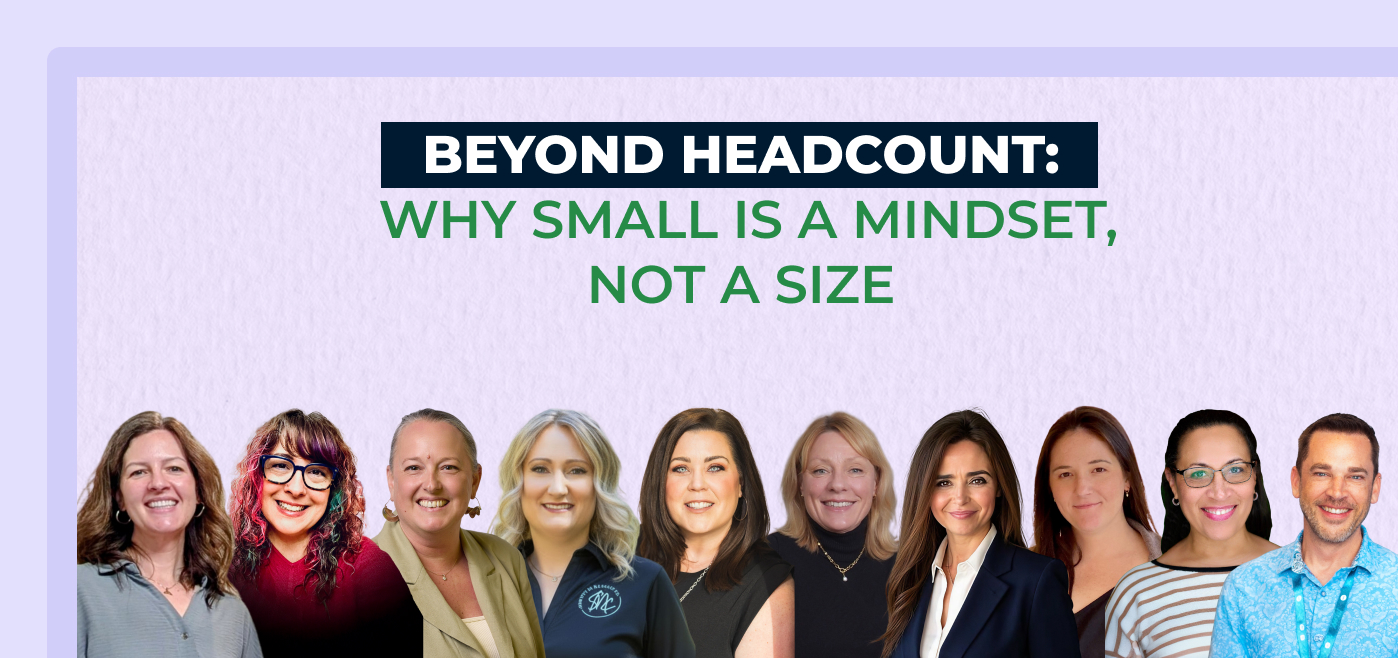
Whether it happened at five employees or 15, almost every firm owner profiled in the Proudly Small issue of Two Cents Magazine eventually came to the realization that they were holding their firms back by holding onto their firms’ work.
For Angela Jenkins of Mindfull Money Matters, that moment arrived last fall, after fighting her way through a stretch where everything felt way too difficult. Key parts of the firm seemed to be slipping beyond her grip—systems, team performance, client responsiveness—and she found herself stuck on a thought she never expected to consider.
She underwent eye surgery around the same time, which forced her into a stillness she hadn’t been able to give herself voluntarily. Unable to work, read, or do much of anything that required her eyesight, she thought. A lot.
“I had to really think, how much do I trust myself to do this?” Jenkins says. “I was like, ‘I trust myself. I know I do good work. I know I have a good product.’”
Once she had recovered, she spent several months rebuilding her team and her systems from the inside out—and she’s not done yet. But she is moving closer to having a firm that runs more smoothly without putting so much strain on her. She feels more in-control of her business, her team, and most importantly, her time.
For Tyler Otto of Specialized Accounting, the pivotal realization was more of an emotional breakthrough—specifically, one that got him over his fear of delegating. Rationally, he knew delegation was essential to scaling the firm. But that didn’t make him any less afraid of how it might affect his team’s perception of him.
Why the work feels so personal
Difficulty with delegation is often chalked up to perfectionism, but the reasons run deeper than that. Sure, many firm owners have a high bar for quality, but the bigger hesitation is that the work is so personal. Client relationships are the bedrock of small firms; it’s often what sets them apart from their larger corporate counterparts. Because of the intimacy they’ve so carefully cultivated, delegating often feels less like task-shifting and more like loss.
“We take a lot of our clients personally, like they’re our own businesses,” explains Christine Salvatore, whose firm, In Line Management, specializes in accounting for entertainment and production companies.
Anne-Marie Kaden of Tiny Paws Bookkeeping started her firm after years of running a pet-sitting business, and for her, trust and empathy are just as important as service quality.
When a founder has been the safe pair of hands fostering that trust, handing off a client can feel almost like breaking a promise. And for firm owners who are still figuring out things like hiring and training, entrusting client relationships to their team comes with an added layer of reluctance. Cathryn Vidal of Crema Bookkeeping in British Columbia ran into that problem early on, due in part to her lack of experience as a manager.
“It was scary, 100% scary,” Vidal says of her initial foray into building a team. She admits her first hires didn’t go well. “Some of my early hires were terrible. They were very green. Maybe they exaggerated what they were capable of, and I didn’t pick up on that until a bit later.”
Evolving from being a great hands-on founder to a great hands-off owner—one who hires and delegates with confidence—can be messy, and that’s perfectly normal. It’s all part of the process of shedding one identity and stepping fully into another.
Laraine Hutcherson of Strength In Numbers Co. is all too familiar with the bumpiness of that transition.
The traits that made these founders successful—high standards, deep personal investment, and unwavering willingness to take on more than they could really handle—are the same characteristics that stymie many firms’ long-term growth (even with a capable team in place). In other words, the identity that built the firm can easily become the identity that traps the founder inside it.
How to break through
Document processes before you think you need to
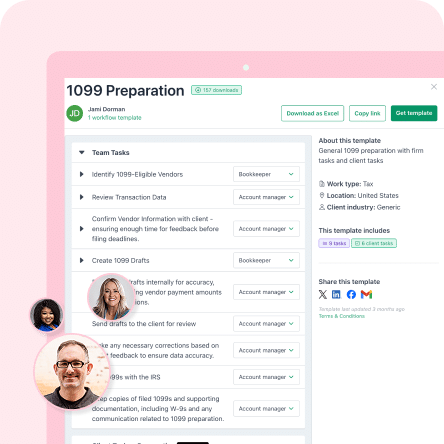
Many founders featured in the pages of Two Cents Magazine expressed regret over failing to document their processes sooner. And while there is obvious operational value to spelling out your workflows in a way that enables others to follow them, the less-talked-about benefit of workflow documentation is that it’s often step one in recognizing that you, as the founder, are not the only person who can do the work.
Melissa Miller Furgeson of Bookkeeping for Good ran her firm solo for years before hiring her first employee, Claire. By then, she was more than ready for the help, and she was incredibly choosy about who she brought on board. So, she never hesitated to take a step some founders avoid due to the subconscious desire to cling to work they shouldn’t: she documented her processes completely.
Her advice for anyone early in their growth journey is to start that process as soon as possible: “I would tell anybody starting out now to write it down from the very beginning,” she says. “Don’t wait till you’re eight or nine years in and start writing stuff down.”
Katie Helle, the founder of Arizona-based Scaled Accounting Solutions, certainly regretted not documenting her processes and expectations right off the bat. She expected a slow ramp when she went full-time with her firm in 2024, but growth arrived much faster than she’d planned. By the time she started bringing on staff, she was scrambling.
Helle had mistakenly assumed the work would stay hers for the foreseeable future, and by the time she realized it wouldn’t, she was already behind. She spent the following summer rebuilding.
Tamra Helton of Tied Out Books wishes she’d not only documented her processes sooner, but also done so with more of a forward-looking lens.
That means thinking beyond the way the firm functions as a solo operation to imagine how it will function in a team environment. The mental exercise alone can help founders get more comfortable with the shift away from owning every single project, task, decision, and relationship.
The emotional side of that transition can’t be rushed, but focusing on the systems side of things first is a great way to ease yourself out of the day-to-day so you can step into something bigger—and, hopefully, better.
What Founders Wish They’d Done Sooner
Katie Helle, Scaled Accounting Solutions: “Over the summer and into the fall, I really reworked all of my processes so my team isn’t relying on me to communicate what needs to be done or how to do something. I wish I would have done that to begin with, but I just didn’t expect to grow like I did.”
Melissa Miller Furgeson, Bookkeeping for Good: “Write it down from the very beginning. Don’t wait till you’re eight or nine years in and start writing stuff down.”
Tamra Helton, Tied Out Books: “I wish I would have looked at my workflow for where my company was headed.”
Anne-Marie Kaden, Tiny Paws Bookkeeping: “Treat it as if you’re gonna have a team from the very beginning. Even if you think you’re gonna be solo for a while, just go into it assuming that there will be other people involved.”
Extend trust before it’s earned
When it comes to trust, many founders have been conditioned to follow the widely accepted “earn first, give second” order of operations. But that doesn’t always serve them well when they’re trying to build a firm that can run without them. Kersting is vocal about the fallacy of the traditional philosophy on extending trust to your team members.
To make this work, Kersting extends trust by pairing new hires with a partner from day one—an existing team member who can field questions, catch mistakes, and course-correct before things go sideways. In this model, trust and support work hand-in-hand to build confidence and prevent missteps.
Kaden instills trust by involving her team in high-stakes decisions—and actually listening to their input. Hiring is a prime example. She used to evaluate job candidates on her own, but now she brings one of her managers into every interview.
For Alisa McCabe of First Steps Financial, the evidence that this approach works is in the tenure of her longest-tenure employees. She built the firm around the premise that if she trusted the people around her, they would stick around long enough to prove she was right—and her second and third hires are still with her today, more than 13 years after she brought them on.
Trusting upfront doesn’t mean disappearing, though. Salvatore, for example, knows that extending trust is crucial to building an autonomous team. But she also recognizes that there are still moments where she’ll need to intervene—sticky, sometimes ugly ones, like when a client attacks a team member’s judgment. In her mind, it’s her job as the founder to have her team’s back in those tough situations.
“If a client pushes back on them, the client won’t win,” Salvatore says.
Build a firm that doesn’t need you
If documentation is step one and trust is step two, then step three is infrastructure (a.k.a. the systems that make trust possible).
Hutcherson runs the largest team of all the firm owners included in this piece, and she’s quick to emphasize that she’s not the glue holding it all together. That’s her practice management platform’s job.
By making all critical work and information visible to the right people, Financial Cents removes Hutcherson as her firm’s single point of failure. And with a team of 15 people and a roster of 80–100 clients, there’s zero room for bottlenecks.
That’s precisely what drove Helton to rebuild her entire workflow architecture inside her practice management software. After realizing that she had, in fact, become the bottleneck, she set out to extract every process, SOP, and client detail out of her head—and build it all into a system her team could use without her.
Kaden adds a “learning by osmosis” element to her documented processes. Every new hire at Tiny Paws Bookkeeping spends several months observing the rest of the team in action before they take full ownership of any client accounts. This allows them to get a feel for the parts of the firm’s operations that are hard to explain on paper (meeting flow, communication tone, company culture, etc.). It also gives them exposure to a variety of out-of-the-norm situations that don’t align with documented processes.
“We spend probably a good six months with every new hire that we have,” Kaden says.
She’s basically built an operational runway that allows her to hand off client tasks and relationships over an extended period of time, making it smoother for everyone involved (clients included).
Redirect your sense of purpose
Once the work is delegated, the founder still has to figure out what their role really is. Even if the workflow problem has been resolved, the identity question often remains.
For some firm owners, Kersting’s “Retire Now and Work Later” concept is part of the answer. It’s all about designing the firm so the owner eventually gets to focus only on the work they love—while also freeing up more time for life outside of work. The ultimate goal is creating a future version of the firm where the owner is optional when it comes to maintaining daily operations, but still essential in setting the overall vision.
In some ways, Helle is already moving toward that model at Scaled Accounting. In her previous life as an employee at a larger firm, her personal world fit into her work. But since starting her own thing, she’s flipped that division on its head.
McCabe has also taken big steps toward making herself less “essential” to her firm’s daily operations, specifically by building an out-of-office system that empowers her team to make decisions and keep things moving while she’s away. In fact, she’s about to leave for Italy for two weeks, and her team has told her not to check in.
“They’re like, ‘We don’t want to hear from you,’” McCabe says. “I’m like, ‘Okay, we’ll try it.’”
But while taking a stress-free vacation is certainly nice—and crucial to keeping burnout at bay—the more important win is that in building this system, McCabe has effectively built a firm that can run without her. And that makes it way easier for her to decouple her individual identity from her firm’s identity.
For Otto, becoming less involved in the day-to-day minutiae of his firm has given him more time and space to direct toward the industry at large—something he has always set his sights on.
Reframe your role
Even though the word “retire” is in the title of Kersting’s book, it’s not really about retiring—at least not in the traditional sense. It’s really about retiring from the kind of work many owners started their firms to escape: the kind they have no control over. But they can’t get there by holding on to every project, task, and relationship—especially as the firm grows.
Instead, they must let go. They must make peace with being replaceable in the work, but irreplaceable in the vision. They must relinquish control to take ownership of their future, inside and outside of the firm.
Want more expert advice on building a firm that runs without you? Check out the recap and recording from Alisa McCabe’s webinar, “Buddy System: Out of Office Ready.”

Enter your email address to receive new issues of the magazine straight to your inbox.