Sarah Queale remembers exactly what it feels like to reach the outer edge of a role with no clear path for growing beyond it.
She spent years working in-house at a landscaping company, handling accounting and office management in what she describes as a male-dominated environment. Her main problem? The company was growing, but her career wasn’t.
 Sarah Queale
For the past 18 years, Queale has run Synergy Tax & Business Solutions, an eight-person firm she founded in London, Ontario. There, she has built the kind of workplace she could have only dreamed of back in those early days—one where people, particularly women, can keep learning, take on new challenges, and actually see where their career might go.
Every staff member at Synergy gets an annual continuing education fund they can use for a course, certification, or book. And they are encouraged to bring what they learn back to the team.
Sarah Queale
But there’s another part of the accounting career conversation that is rarely talked about: what happens after you’ve become really good at the work itself?
In the right small firm, a senior bookkeeper can become the person clients call when they don’t know what their numbers are telling them. An accounting manager can move from producing financial reports to helping a business owner make data-informed decisions. A service line lead can become the person developing the next generation of practitioners.
The opportunity might not always be spelled out in bold print. But you can create it by becoming so valuable that the firm creates a place for that value to be leveraged.
The Bookkeeping Service Shift
A generation ago, the line between “bookkeeper” and “advisor” was relatively straightforward. Bookkeepers recorded what happened. Advisors helped the client decide what to do about it. Inside small firms today, that line has all but disappeared. The titles might not have changed, but the work certainly has.
Angela Jenkins, who runs Philadelphia-based Mindfull Money Matters, sees her role as more about interpretation than bookkeeping.
 Angela Jenkins
For Jenkins, the financial records are more than documentation of what happened. They can also point to where things should go next. Her job is to translate that underlying story into something the owner can act on.
Dave Kersting, founder of Capovario, calls his firm’s slightly different version of this work “concierge consulting.” (He has always rejected the word “advisory,” because he doesn’t believe that label adequately captures the relationship at the core of the work.)
The idea is that it’s less about having all the answers and more about knowing where to send a client when they encounter a problem Capovario alone can’t solve. From workers’ compensation specialists to insurance agents to people who understand 401(k) plans, Kersting’s firm helps clients find the right person (and makes the introduction, to boot).
“To me, advisory services sound like I’m telling you how to run your company,” he says. “I can’t advise you on how to run your own company.”
Anne-Marie Kaden, who owns Tiny Paws Bookkeeping, describes a similar evolution of services. At first, she says her firm is “just there to illuminate the numbers” and show you what is and maybe the path forward.
Then, as if reconsidering her description, she catches herself.
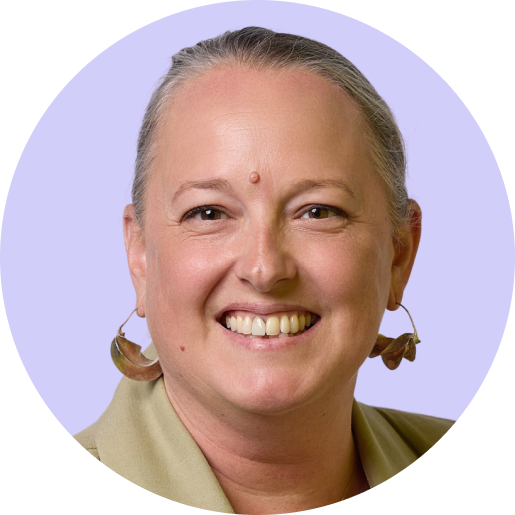 Anne Marie Kaden
It’s a natural progression. After all, once you spend enough time studying a client’s business, it’s difficult to stop at simply reporting what has already happened. You start to see patterns, think about them in terms of what the owner is trying to accomplish, and notice when something changes. Eventually, the client starts asking what you think.
Lynn James-Young, founder of Bring It Bookkeeping, has built that broader role into her firm’s client engagements. Even after expanding beyond the one-woman operation she started years ago, she still meets with her clients one-on-one every quarter.
 Lynn James-Young
Those quarterly conversations turn the financial review into something bigger: a conversation about where the business is going and what the owner wants it to become.
Whether it’s called advisory, concierge consulting, or something else entirely, the vocabulary matters less than the work itself.
And in this model, the senior practitioner is no longer just the person who knows what the numbers are. They are the person the client calls when they need to understand what the numbers mean, what to do next, and who can help them get there.
What Senior Practitioners in Small Bookkeeping Firms Actually Do
You won’t see “storyteller” or “concierge consultant” on a typical org chart. But look under the hood of a senior practitioner’s typical week at a small firm, and you’ll find work that goes far beyond preparing financial statements. Here’s a rundown of how the modern bookkeeper or accountant goes beyond simple number-crunching in their regular day-to-day.
Translation: Translation means turning numbers into language a business owner can actually understand. And that requires reading the room as much as the report.
Kaden built Tiny Paws Bookkeeping around a team with deep experience in the pet-care industry. What’s harder than finding team members with the necessary technical skills is hiring people who can “recognize when the client’s eyes are about to glaze over,” she says. Someone who knows when to stop, simplify the information, and make sure the client is still with them.
Pattern Recognition: Beyond recording what happened, the best practitioners notice emerging patterns. Sometimes, it’s a margin eroding on one service line. Other times, it’s an out-of-the-norm figure that warrants a closer look. Or, it’s a connection between something in the financials and something the client has mentioned about the business (even just in passing).
More often than not, this part of the job shows up as unprompted observations in the middle of client conversations. But those observations are some of the most valuable contributions a senior practitioner can make. They come from gaining a deep familiarity with the business, learning what normal looks like, and noticing when something’s amiss.
Strategic Input: This is where “this is what your numbers say” becomes “here’s what I’d think about doing next.”
James-Young weaves that conversation into her process from the start. The first question she asks a new client is, “What’s your exit strategy?” And that’s not because she’s trying to rush them out the door. She believes the answer changes everything that follows.
Lynn James-Young
Her quarterly client meetings give her a chance to revisit those goals alongside the financials, measuring the numbers against what the client wants to achieve.
Connection: Sometimes the most valuable thing a practitioner can offer doesn’t exist inside a spreadsheet or general ledger. It’s more about their network.
As mentioned above, Capovario has developed an identity around this approach. In one memorable case, Kersting was separately working with a client who was dreaming about doing a reality TV show, a ghostwriter who had connections at Netflix, and someone else who worked as a production manager in film and television.
“These three people need to meet each other,” Kersting remembers thinking.
He introduced them, and the show they eventually created together became a reality TV hit. Now, most connections a senior practitioner makes won’t end with a television credit—and they don’t need to. It might be the right insurance agent, a benefits specialist, or simply someone who has already solved the problem a client is trying to solve. The skill is knowing who can help and making the introduction.
Mentorship: Sometimes, the most useful thing you can do for a client is give them enough knowledge to solve a problem themselves.
Tamra Helton, founder of Tied Out Books, sees part of her role as preparing clients to get the most out of the other professionals in their financial lives.
 Tamra Helton
She believes that a client who understands their own numbers can ask better questions and have more productive conversations with other contributors to their business, including the person handling their taxes.
On their own, these “extra” aspects of accounting and bookkeeping work might not seem like much. But taken together over months and across clients, the role becomes something fundamentally different from pure compliance. The title may still say “bookkeeper” or “accountant,” but the work transforms into something more.
The Mentorship Advantage
Most accounting professionals see career progression as a sequence of titles: bookkeeper to senior bookkeeper, senior to manager, manager to partner. But title changes alone don’t drive those transitions. At some point, someone has to invest in your ability to take the next step.
When the team is small, the person teaching you is likely close to the person making decisions about your future. Often, they see your potential in real time and take action before you even ask.
Tamra Helton, founder of Tied Out Books, takes that philosophy even further. She intentionally hires people with little to no experience—because she likes developing them.
“I particularly like to work with people who are not seasoned,” she says. “I have a passion to teach people.”
You can see the long-term value of an intentional investment in people at Alisa McCabe’s firm, First Steps Financial. Her second and third hires are still with her today—more than 13 years after she first hired them.
 Alisa McCabe
James-Young takes the idea one step further, saying she aims to develop partners rather than just employees.
Lynn James-Young
That mindset has resulted in some of her team members actually running their own branches of the firm, taking real ownership of what they helped build.
Beyond proactively giving employees opportunities to develop their skillsets, Tyler Otto of Specialized Accounting makes a point of proactively raising compensation for deserving team members. One employee has seen their pay increase by 70% since they started without ever approaching Otto about it.
 Tyler Otto
Clearly, the small-firm advantage isn’t simply that the office is smaller and the team is closer. It’s that the distance between contribution and opportunity is often shorter.
In a large firm, your growth may have to travel through layers: a manager who has to build a case, a review cycle that happens once a year, a budget someone else controls, and an opening that may or may not exist above you. You can become significantly more capable without there being an obvious place for that capability to go.
It’s not that large firms can’t offer mentorship. They can. It’s just that the proximity that exists at small firms makes development harder to decouple from the day-to-day work—and easier to turn into an opportunity.
The Skills That Get You There
Advancing beyond the senior bookkeeper or lead accountant position may not be as much about another certification or software skill as it is about a shift in how you approach the work you’re already doing.
The fastest way to get to the next level is to start practicing the skills you’ll need to succeed there before the title catches up.
Communicate beyond the technical
Technical competence is the baseline these days. What distinguishes a more senior practitioner is what happens after the books are closed: can you explain what they mean?
That’s exactly why Kaden looks for someone who can “recognize when eyes are about to glaze over” when she hires.
If you want to be seen as more than a technician, put some effort into practicing that translation. In your next client meeting, notice whether you’re simply reciting the numbers or helping the client understand what they mean and which decisions they might influence.
Take ownership of business outcomes
If you want to be trusted with more, start acting like you’re on the hook for the outcome. There’s a major difference between treating a client engagement as a task list and treating it as a relationship you’re responsible for.
Task-list thinking: “Did I complete the reconciliation?”
Ownership thinking: “Is this client in a better position because of the work I did this month?”
That shift in mindset inherently changes how you work. You start noticing things that aren’t technically on your to-do list. You follow up when something doesn’t look right. You remember what the client said they wanted to accomplish three months ago. You start thinking about the health of the relationship, not just the completion of the deliverable.
Bring problems with options
When you go beyond simply pointing out problems, firm leaders learn to trust you with more. So, if a client’s margins are slipping, don’t stop at flagging it. Think through why it might be happening and bring a few possible ideas of how to respond. If a process is creating unnecessary work, don’t just explain what’s broken. Suggest how you would fix it.
You won’t always be right, and that’s okay. You don’t have to come up with the perfect answer every time. You just need to show that you’ve already done some of the thinking. That is the difference between someone an owner has to manage and someone an owner trusts to make decisions.
Invest in your own continuing learning
The best small firm owners create opportunities for their teams to learn. Queale does that through an official continuing education fund, and if your firm offers something similar, definitely use it. But don’t wait for an education budget to push yourself to grow. (Especially when there are plenty of low-cost ways to skill-up.)
Read a book. Take a course. Ask someone more experienced how they approach a problem you haven’t encountered before. Pay attention to how the people you admire communicate with clients and make decisions.
Practitioners who successfully grow into broader roles typically keep expanding what they understand, what they can explain, and what they are willing to own.
Technical competence gets you into the work. Judgment, communication, ownership, and trust are what move you closer to the client, the decisions, and eventually, the business itself.
The Counter-Story: Why You Don’t Have to Settle for Being “Just a Number”
The old argument for staying at a large firm was the scale: more resources, more prestige, more specialization, and a more defined career ladder (with more rungs on it). But just because the rungs are there doesn’t mean they’ll lead anywhere worthwhile. And they certainly don’t guarantee that anyone is paying close enough attention to notice when you’re ready for the next step.
Several of the owners featured in the Proudly Small issue of Two Cents Magazine built something different after experiencing firsthand what they didn’t want.
Cathryn Vidal, for example, was a senior bookkeeper at her previous firm. She liked the work and the client relationships she’d built. But after a new office manager was hired, the two clashed repeatedly, and Vidal found herself feeling “bullied and uncomfortable.”
“It went on like that for a couple of months and then I just kind of had enough of it,” Vidal says.
As a senior bookkeeper, she’d already begun questioning whether hopping to another firm would simply put her right back into the same situation. So instead of jumping ship, she started Crema Bookkeeping.
Kersting’s breaking point looked slightly similar. Before Capovario, he worked in an environment he remembers as “condescending,” where people were yelled at, written up, and expected to work 12-hour days. At some point, something in him just said: “I’m done. I’m done being beat up.”
 Dave Kersting
He built Capovario around what he wanted instead: flexible schedules, transparency, and a culture where the bottom line is not the only thing that matters.
Katie Helle’s story unfolded a bit differently. After 15 years at a traditional firm, she realized the hours no longer fit the life she wanted.
“I was working a lot of hours,” she says. “When you’re young and don’t have children, it doesn’t really matter how much you work. But once you have kids, your perspective on what’s important really changes.”
So she built Scaled Accounting Solutions around a different premise: her job should work around her life, not the other way around.
For Queale, the problem was stagnation. She was watching other people move forward while she stayed put. Her male counterparts were constantly getting shiny new roles and titles while she was, in her words, left behind.
The circumstances were different for each of these owners. But the common thread is their realization that a traditional workspace no longer offered what they needed, and their decision to build something different.
The Career Path in Disguise
Sometimes career progression does come with a bigger title, a bigger team, and a bigger office. But that is not all there is to growth. It can also mean becoming more valuable, more trusted, and more involved in the businesses you serve.
Your current title doesn’t have to define you forever. Opportunity may come in the form of a client who starts asking for your opinion, a business owner who trusts you with bigger decisions, or a new hire you find yourself mentoring. Over time, those responsibilities can grow into a leadership role, a path to partnership, or a chance to help chart the growth of the firm itself.
You don’t have to leave a small firm—or even change your title immediately—to become more. You just have to keep learning and evolving. That’s how you end up with a seat at the table you helped build.