How small firm owners are creating team environments that big firms can’t replicate
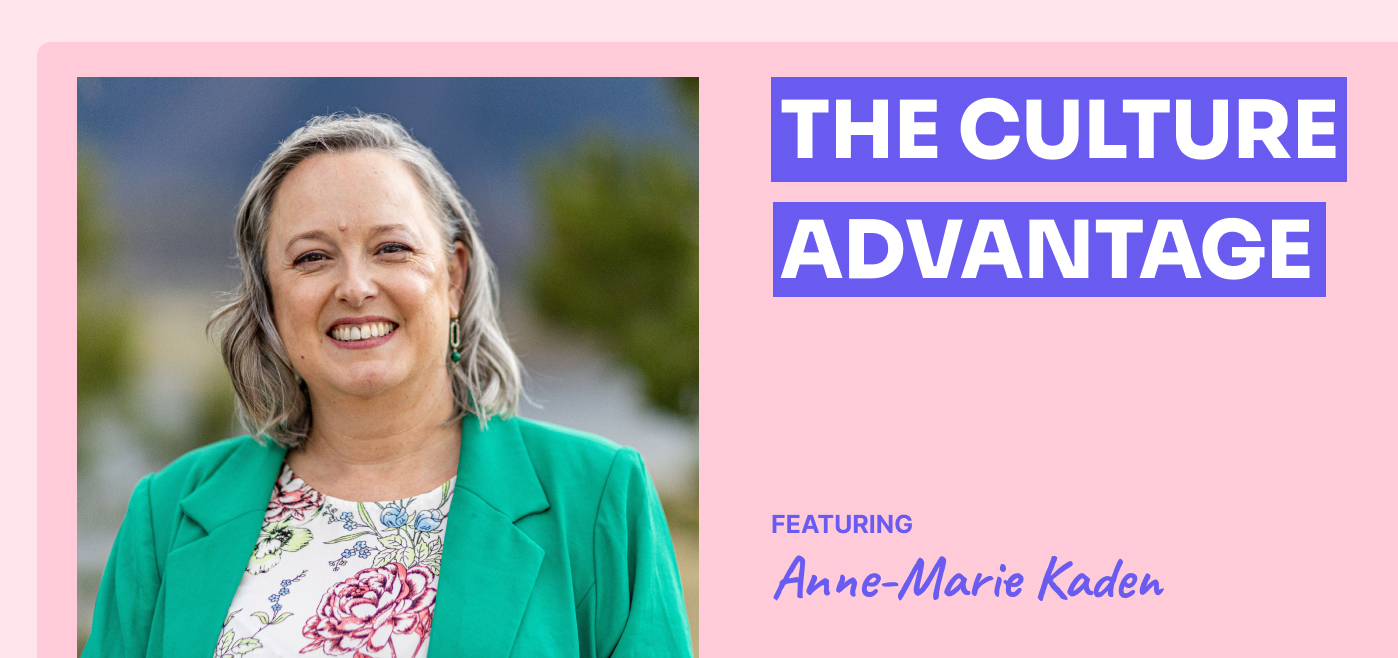
When Anne-Marie Kaden flew her nine remote employees to Colorado for a long weekend, she wasn’t sure what to expect. Her team at Tiny Paws Bookkeeping had been working together for over a year, some of them for much longer. They were friendly in staff meetings, communicated with each other clearly and respectfully, and had no problem collaborating to keep tasks moving on schedule. But they didn’t really know each other—at least not the way Kaden wanted them to.
Then they arrived at the house Kaden rented for the retreat.
She couldn’t pinpoint a particular activity or team-building exercise that triggered the shift. Instead, their newfound bond was forged over shared meals, late night conversations, and the simple fact of being in the same room for an extended period of time. By Sunday, the team dynamic had completely changed.
“Now they were a team,” Kaden says. “Now they knew each other. They were real people to one another.”
It goes to show that in an industry built on deadlines, compliance pressure, and tedious work that can easily grind people down, the firms with the strongest teams and lowest turnover aren’t necessarily the ones offering the highest salaries or the fanciest perks. They’re the ones building cultures that treat people like whole humans first—and employees second.
And that’s something many large firms simply can’t replicate.
Hire for the Person, Train for the Job
When assembling a small team, skills are obviously important. On large teams, there are more people to cover gaps in expertise—but in a small firm, you really have to make each hire count.
Still, a team member who is technically proficient but culturally misaligned can do a lot more damage than good—not just in terms of your firm’s revenue and reputation, but also in terms of overall staff satisfaction and morale.
Cathryn Vidal, who runs Crema Bookkeeping in British Columbia, learned that lesson the hard way through early hiring misfires.
“Some of my early hires were terrible,” she says. “They were very green. Maybe they exaggerated what they were capable of, and I didn’t pick up on that until a bit later.”
A more recent miss that stuck with her was a candidate who looked great on paper, but didn’t live up to expectations in real life.
“She presented very well,” Vidal recalls. “She had a lot of the qualifications I was looking for, but her personality sort of felt flat. She wasn’t able to get along with anybody else on the team.”
Her communication with clients was also clunky and awkward, and in hindsight, Vidal says she should have picked up on that during the interview process.
“I would just watch out for that kind of stuff going forward,” Vidal says. “I want all our client communication to feel very natural, and with her it never did.”
Through this experience, Vidal has learned to really hone in on her instincts about potential job candidates.
“I think it’s just kind of that gut intuition feel,” she says. “What are they like? How do we converse with each other? Is it easy? Does it feel natural? Or are all the questions and answers kind of forced? If they have a positive attitude and they’re easy to talk to, then I think in general, they’re going to be easier to work with.”
That said, culture-first hiring isn’t just about finding warm, easy-to-talk-to people. It also requires structure and clear expectations—something Tyler Otto, founder of Specialized Accounting, learned the hard way in his firm’s early days.
Otto also hired family members early on, which he doesn’t recommend.
“While family is lovely, I’ll never do that again,” he says. “It just complicates everything, especially when you have differences in opinions on how the company culture should be.”
Today, his firm still has a flexible, fun-loving culture—but with clear standards, defined work hours, and built-in accountability. The lesson: hiring for culture means hiring people who will thrive within your structure, not abandoning structure to make them happy.
Pro Tip: 3 Questions to Ask in Every Interview
Drawn from real hiring philosophies from real firm owners:
- Tell me about a time you had to learn something completely new for a job. (Tests for growth mindset and humility.)
- How would you explain a financial concept to a client who’s nervous about their numbers? (Tests for translation skill and empathy.)
- What’s a workplace value that matters to you? (Tests for culture alignment without leading the witness.)
Embrace Flexibility as More Than a Perk
Ask any small firm owner what their team values most, and the answer almost never starts with money.
Katie Helle, founder of Scaled Accounting Solutions, designed her firm specifically so she could do things like pick her daughter up from school on any given afternoon, attend Pilates classes mid-day, and not work more than 40 hours a week—even during tax season.
“There are many Fridays that I work maybe a couple hours checking emails, and then I’m out doing things with family or running errands,” Helle says.
Vidal embraces a similar philosophy.
“I love being able to leave early to go watch one of my daughters play soccer,” she says. “And I want to extend that to my staff as well. If they want to take a day off or an afternoon to do something fun, by all means [do it]. I just like deadlines to be met.”
For Laraine Hutcherson, founder of Strength In Numbers Co., flexibility is baked into her organization’s DNA. In fact, it’s the entire reason the firm even exists. Many Strength In Numbers team members—Hutcherson included—are parents of children with disabilities.
She started the firm so she could have the flexibility she needed while still making a living, and as Strength In Numbers grew, she began attracting team members who were incredibly talented—but unable to commit to a standard nine-to-five schedule.
Alisa McCabe, founder of First Steps Financial, is equally bullish on the long-term power of flexibility. McCabe built her firm from the ground up with one explicit goal in mind: creating a workplace that supported women who wanted real work-life balance.
“I wanted to create a company that supported women who wanted to have a work-life balance, whether it was to be home with their kids or take care of aging parents or stay home and take care of their pets,” McCabe says. “I didn’t care what it was. I wanted them to be able to have that work-life balance.”
Years later, the results speak for themselves. McCabe’s second and third hires are still with her today—more than 13 years after she brought them on.
“It has been an amazing experience for me to be able to do that,” she says.
Unlike larger firms that are beholden to stricter employment policies, small firms can offer something that more and more people are prioritizing: a work schedule that bends around their lives instead of demanding the opposite.
Give Trust as the Default
It might sound counterintuitive, but one of the foundational tenets of fostering a great culture in a small firm is trusting new hires right out of the gate. This builds both confidence and ownership—essential ingredients in the recipe for staff loyalty.
“You have to give the trust right away,” says Dave Kersting, owner of Denver-based Capovario. “I know people say you’ve got to earn trust. I think you have to trust and then give people the resources to communicate.”
Kersting does everything he can to make his staff members feel comfortable approaching him with questions and concerns, because he wants the collaborative culture he’s built at Capovario to go all the way up the chain to the leadership team.
“I want to be just like any other team member,” Kersting says. “That’s what I really want. I don’t want to be the owner. I just want to be like everybody else.”
Christine Salvatore, whose firm specializes in accounting for entertainment and production companies, takes the concept of employee trust to a whole other level. Her team knows that if they raise a concern about a client—communication issues, scope creep, a difficult dynamic—she’ll always have their back, no questions asked.
That kind of trust requires a healthy dose of vulnerability from owners. It means accepting that things might be done differently than the way you’d do them—and that mistakes might happen—but giving your team full autonomy anyway. It’s also the key to productive delegation, a prerequisite for growth in any business.
Why Delegation is So Difficult
For many firm owners, delegation is the single hardest part of growing their business. Some may chalk it up to perfectionism, but the root cause of their hesitation is often the deeply personal nature of their client relationships. This can make stepping away feel almost like abandonment.
But the firms that grow smoothly are the ones whose owners accept that “good enough by someone else now” beats “perfect by me, eventually.” Owners who fail to make this shift in mindset end up trapped in the work, unable to grow past their own capacity—and unable to offer their team the trust and autonomy that keeps them around for the long haul.
There’s also a less-discussed emotional dimension to delegation, as Tyler Otto of Specialized Accounting points out. When you’re the firm’s only employee, you see every win firsthand. As you scale, your team handles the wins—and the only things that escalate to your desk are the issues.
“You’re just seeing the hard problems,” Otto says. “If you aren’t emotionally ready for that, there is a moment where you feel like, as you start to scale, your failure increases—because the portion of bad stuff you see just increases. So being able to live with that, deal with that, internalize it, and then build feedback structures that allow you to see the wins and the positivity—that is incredibly important as you continue to scale.”
Make Remote Feel Close-Knit
Many of today’s small firms are at least partially remote, which is great for flexibility—as long as “remote” doesn’t become synonymous with “isolated.” But, there’s intention that goes into preventing that from happening.
Kaden’s annual retreat is perhaps the most tangible example of that intention in action. Before the first one, her team was polite and professional—but disconnected. People weren’t really leaning on each other and using each other as resources. After the retreat, that totally changed.
Lynn James-Young, owner of of Bring It Bookkeeping, did something similar—bringing her entire team together for a long weekend in Oklahoma.
“We met at the Choctaw Casino,” she explains. “Some people had campers or I put them up in rooms, and we took a full day and I had a guest speaker, and we just banged out all the different things that we needed to talk about. It also helped give them somebody that they can call besides me if they’re having a problem, because I don’t want to be the plug to keep us from growing.”
Even Sarah Queale, who runs Synergy Tax & Business Solutions out of a physical location in London, Ontario, is intentional about fostering relationships that reach beyond the office walls. She brings her team together for bi-weekly meetings that always include at least some non-work conversation, and she plans a variety of out-of-office activities (charcuterie-board workshops and holiday planter-pot building are two recent examples).
Connection doesn’t have to be an annual event, either. McCabe has built daily moments of team interaction into her firm’s rhythm, including a quick standup every workday.
The payoff of that consistent, intentional connection became unmistakable when McCabe brought her entire remote team together in person for the first time at the Scaling New Heights conference. Her team—who had only ever interacted virtually—immediately gelled.
“They hung around together like a swarm of bees,” McCabe recalls.
For McCabe, it was a moment of validation.
“It really was, like, seriously bringing me to tears,” she says. “Because I work really hard at that. I want them to like each other and rely on each other and understand each other and have compassion for each other.”
Build the Career Path, Even If You’re Small
Back before Queale started her firm, she found herself in a situation where there was no visible path to career advancement.
“I saw my male counterparts growing and getting promotions,” she recalls. “And I was kind of left back. There was nowhere else to go.”
She built her firm specifically so that wouldn’t happen to the people on her team, offering benefits like continuing education funds as well as clear growth pathways.
James-Young took the same idea a bit further. From the beginning, she designed her firm to develop partners, not employees.
Two of her team members are now partners running regional branches.
Investing in employees doesn’t always require a formal title change or a new path on an org chart, either. Sometimes it’s as simple as recognizing growth with compensation—without waiting to be asked. That’s the philosophy Otto built into his firm from the start.
Otto’s reasoning is rooted in his own past experience as an employee.
“I always hated that about other companies,” he says, “I would prove myself over and over and I would have to ask and wait two years for a raise. So now, I’m already making enough money. I’m making what I want out of this company. If there’s extra money left over, I find out who on the staff I can give it to to keep them around.”
For small firms, this is one of the most underused recruiting and retention tools available. You don’t need to be a 200-person operation to offer a real career trajectory and compelling reasons to stick around. You just need to be intentional about what growth looks like in your organization—and willing to invest in the people who want it.
Lean into Your Competitive Advantage
Small firms can’t always out-spend or out-brand large firms with bigger budgets and flashier marketing. They can’t offer the same benefits packages or the same name recognition.
But they can offer a workplace where flexibility is given freely, trust is the default, professional growth is possible, and the team feels like a team rather than a list of usernames in a Slack channel.
The firms whose employees stay long term are the ones whose owners figured out, sometimes the hard way, that culture is more than a committee or a poster on the wall. It’s the daily experience of being respected and appreciated.
If you build a firm where that’s the baseline, people will stop looking for the exit—and start looking for a way to stay onboard for the long haul.



Enter your email address to receive new issues of the magazine straight to your inbox.