
Why the accounting professionals getting the most out of AI rely on it the least.
The first thing Deborah Harris tells any new hire is that it’s her job to make sure they never become obsolete.
It’s an odd promise from someone whose firm has, by her own admission, more AI “headcount” than human staff. Harris is the CEO of Grow Group, a distributed team of fewer than ten people shadowed by twice as many digital assistants—one of them a context engine she spent four years building and now talks to by name (Auri, by the way).
She’s been beta-testing AI accounting tools since well before most folks in the profession even knew what they were. And now, in 2026, she’s farther up the adoption curve than almost any of them—and more worried about the future of the industry.
Because as it turns out, people with the deepest understanding of AI technology also hold the most specific fears about its implications—hard-won reservations they’ve woven into the policies and processes that enable them to use it both ethically and effectively.
For high adopters like Harris, concern isn’t decoupled from excitement. Instead, the two exist in tandem—and that’s the exact recipe for the greatest possible results.
Caution, Not Resistance
There is, without a doubt, a lot of hesitation about AI across the accounting world. It’s tempting to chalk it all up to a conservative profession that’s wary of anything new—content to hang back as innovation races ahead. Harris and her tech-savvy peers beg to differ.
Patti Storms is, by her own cheerful admission, a cynic. She supervises the client-accounting team at BKC, a firm of roughly 90 people, and she was trained as a social worker before she ever touched a ledger. Whenever she opens a client’s books, she does not assume the software has gotten anything right.
“I’m disbelieving at best,” she says of the AI now woven throughout the tools she uses. She then corrects herself, because disbelieving isn’t quite the right word. She trusts it exactly as far as she can verify it, which is a slightly different sentiment.
Still, it’s a sentiment that’s easy to mistake for resistance. But the opposite is actually closer to the truth. As noted in the recently released AI in Bookkeeping & Accounting report, for anyone who personally carries the liability that comes with new technology, caution isn’t really the same as being behind. Instead, it’s professional judgment doing what it’s supposed to do.
And the accounting profession, it seems, is not actually that afraid. In the same report, more than seven in ten professionals describe themselves as optimistic about AI’s role in their work, while fewer than one in ten are concerned.
Jean Zick is proof that enthusiasm and caution can coexist. Zick, the owner of Juna Financial Solutions, describes herself as “a glass half full person” who first looks for the opportunity in a new tool rather than the threat. At the same time, she treats client data security as, in her words, “bottom line.” The optimism is why she adopts; the caution is why she adopts carefully.
And perhaps the most-talked-about cause for that caution is AI’s tendency to fib with conviction.
Confident Fabrication
If you were to ask virtually any accounting professional what worries them most about AI, their answer would likely be something along the lines of, “It lies, and it lies with total confidence.”
And that fear bears out in the data.
Accuracy and “confident-wrongness” is the single largest category of AI worry, cited in 38% of survey responses. Only 19% of professionals trust AI output enough to use it with limited review.
The need for human review isn’t a phase the profession expects to grow out of as AI advances, either; it’s built into the design of how they use the tools.
Bri Como puts it bluntly.
 Bri Como
At first glance, Como is far from an AI skeptic. She builds agents into her firm’s workspace to handle things like tracking billable time and standardizing reference material. But she’s also clear-eyed about what AI really is. Because most models were trained on the open web, she explains, they inherited the internet’s misinformation along with its knowledge. So, it’s no wonder that they tend to get things wrong.
The AI errors Como and other accounting professionals describe are rarely dramatic. They’re typically small, plausible, and easy to miss if you aren’t looking hard enough.
Darcy Huey, the office manager at MSM Advisors—who, outside of her day job, is also an accounting student—recounts asking a chatbot about fun fall activities near her home and getting a response about a farm with a petting zoo and a pumpkin patch. It sounded right, and it was indeed a real place. It was also in a completely different state.
 Darcy Huey
Zick has watched this kind of overconfidence play out from the client side, too, which is its own kind of hazard. Some of Juna’s clients have connected their accounting software directly to a general-purpose AI assistant and started doing their own reporting. When she sees this happen, she immediately steps in. “Time out,” she tells them—if you pull those numbers mid-month, before the books are closed, they aren’t complete, and the AI won’t always flag the gap.
Of course, bookkeepers and accountants are known for their remarkable attention to detail, so it should come as no surprise that they’ve largely figured out how to combat this near-universal AI concern. It all comes down to verifying everything, every time, against a source you trust. And most firms that have adopted AI in any capacity have already built this habit, formally or informally.
Pro Tip: How Accounting Firms Keep AI Honest
The professionals getting the most out of AI are also the most systematic about not trusting it. Here are a few of their working habits:
- Fence it in. Feed the tool only vetted internal sources rather than the open web, so it can’t wander off and find questionable information that might taint its responses. (Como’s firm actually built a knowledge base for AI agents to draw from exclusively.)
- Check the source, not just the answer. A good tool cites where it got its information, so click through and confirm the original source before you rely on it.
- Never hand over final numbers without a human seeing them first. Calculations and financial output must always get reviewed by a person, full stop.
- Strip the identifiers. Swap client names for placeholders or brackets before anything goes into a prompt, especially for general-use tools.
- Give each deliverable two sets of eyes. Treat AI output the same way you’d treat a junior employee’s work: nothing should go out unreviewed.
Como still remembers the fairly recent headlines about chat conversations from a popular AI assistant that began turning up indexed on Google. Most users didn’t care, but some had pasted in sensitive details that were suddenly public. It’s part of why Huey always removes client names and other sensitive information before entering any data into an AI tool.
That’s the good news about the very-real fears around things like AI accuracy, security, and privacy: the risk can largely be mitigated through best practices applied at the user level. Unfortunately, not all concerns fall into that category.
Erosion of Critical Thinking
The State of AI report features a topical breakdown of 463 open-ended responses about what worries the profession most. Four dominant themes surfaced. Accuracy led at 38% of responses, with data security following at 19% and job displacement at 14%. Last, at 13%, was over-reliance on AI eroding critical thinking.
Straight from the Source: What Worries Us Most
But the deeper professionals go with the tools—and the higher they climb on the adoption curve—the more that ranking appears to turn on its head.
Taylor Ammons runs operations at Accounting Therapy, a fully remote firm of eight, and she has thought long and hard about how constant AI use affects the user. She reaches, a little sheepishly, for a movie. “I don’t want to be the people on the boat in WALL-E,” she says, referring to the passengers who, waited on by machines for generations, have become completely dependent on technology to exist. She recently saw a study suggesting that heavy AI users show less brain activity, and it hit her hard. She’s careful to say she still feels sharp—still does her own thinking first. But the anxiety is real.
 Taylor Ammons
Como has drawn a hard line on her own AI use precisely because of this worry. She uses AI heavily at work, where the guardrails are tight and the review is constant—but in her personal life, she avoids it almost entirely. And even in her professional life, she’s conscious of the dangers of overreliance. When she leaned on AI too much at a previous job, she noticed a decline in her cognitive abilities.
“I felt like it made me dumber not having to think, and I don’t like that,” Como explains.
For Harris, one of the most avid AI users featured in this piece, the stakes are even higher. The way she sees it, depth of use is exactly what makes vigilance non-negotiable: the more the machine does, the easier it is to stop watching it.
 Deborah Harris
And then there’s Huey, who is straddling the line between building job skills and AI skills more intensely than most of her peers. In addition to her job as an office manager, Huey is also in school for accounting—and that’s where she worries most about her dependence on AI.
“The more I rely on AI, the less I’ll retain,” Huey says.
So, she makes herself generate her own ideas before she asks the tool for any, and she refuses to let it write on her behalf outright, for work or for school—not because the output would be bad, but because she knows what it will cost her later. She thinks back to her high school AP history teacher telling the class they could use the textbook during tests because school policy allowed it, but that they’d almost certainly fail the AP exam if they did. She didn’t use the textbook, and the lesson stuck.
“If I’m just forgetting all the information and completely relying on my textbook, or completely relying on information from AI…I’m really not gonna do well on the CPA exam,” Huey says. “So I need to make sure that I’m actually memorizing the information.”
This particular AI fear is perhaps the toughest to overcome, because there’s no real black-and-white solution. You can verify an inaccurate output. You can lock down insecure data. But you cannot, with a simple policy or a paid subscription, prevent your own thinking and judgment from atrophying if you outsource it too much. The only defense is the intentional, slightly inconvenient choice to keep doing the thinking yourself—and that’s exactly the choice the tools are designed to make optional.
For some professionals, part of the solution is using AI mainly for the tedious tasks that don’t require deep expertise. Which introduces a whole other problem for the industry at large: if AI takes over the work that juniors once learned on, how will they build the knowledge they need to advance to more senior roles?
The Next Generation
Storms has a name for the people she worries about most in this new AI era: the kids in back. They’re the younger associates at her firm, capable and eager. And from what she’s observed, they haven’t yet developed the innate knowledge and instinct that years of experience eventually instill—the gut feeling that it’s time to go digging when something looks amiss.
To explain this reservation, she offers a hypothetical example. Say a tax client comes in with figures that appear normal on the surface, and a junior preparer processes the return exactly as presented. What the junior doesn’t think to ask—but a veteran would—is whether anything changed this year. Did someone pass away? Was there an inheritance? A house sold? The seasoned accountant knows there’s almost always another piece of information hiding somewhere, because they’ve been burned by the omission before. The worry that keeps Storms up at night isn’t only that the junior won’t ask. It’s that the AI won’t prompt the question either.
That’s the crux of the talent pipeline problem, and it’s felt most keenly by the people who came up the old way. Ammons can pinpoint exactly what’s lost when the tedious work disappears. She describes the grind of pulling a report, exporting it, manipulating the data by hand, and importing it—and then she makes the argument for keeping the grind around.
“There’s a lot of learning that happens there,” Ammons says, adding that when it disappears, it’s much harder for beginners to get a sense of what “good” looks like.
Rebecca Isaacs, who runs Isaacs & Associates with a team of ten serving roughly a thousand clients, describes the stakes with characteristic bluntness.
 Rebecca Isaacs
Still, she’s gotten on board with AI in her firm, even starting to run her preparers’ work through an AI review step. It’s a striking paradox most accounting professionals are negotiating in some capacity: taking the good with the bad, while trying to fend off the bad as much as possible.
While the staffing pipeline alarm was cited by several veteran accounting professionals featured in this piece, interestingly, the AI report pegged it as a top worry mostly for those newest to the profession: 34% of those with under two years of experience cited it as a pressing concern, versus 13% of those with 11–20 years and 16% of the most senior respondents.
Harris’s answer to all of this goes back to her new-hire promise—the one about never letting her people become obsolete. It might sound like emotional reassurance, but it’s actually a business strategy. The day-to-day tasks will change, she tells new employees; AI will absorb the more routine, mundane work. But the need for someone who understands the numbers deeply enough to catch the AI being confidently wrong will never go away. Her job, as she sees it, is to make sure her people become those watchdogs—which means protecting their ability to learn, even as technology absorbs a lot of the work that once supplied that learning.
The Policy Gap
One theme running across this entire narrative: the professionals most vocal about AI’s dangers are, overwhelmingly, the ones who have actually built defenses against them.
The broader profession has not.
87% of firms actively using AI have no formal AI policy, and 23% have no plans to create one. Solo practitioners are the most exposed: 37% have no policy and no intention of writing one—leaving them with neither documented rules for AI use nor another person to catch AI’s mistakes.
Gena Graziano, integrator and chief of staff at First Steps Financial, says her team maintains a documented policy and an AI committee that regularly meets to review new developments. Zick’s firm has a written information security program, a documented AI policy, and an applications committee that vets every tool before implementation. Como says her firm spelled out its guardrails early: work accounts only, no personal or free versions of AI tools, and no sensitive client information entered under any circumstances.
Ammons’s firm gives new hires paid company accounts for any AI tools they use as part of their job, a protocol that emerged after leadership discovered that some of the free tools in use lacked the enterprise-grade security protections the firm required.
Taylor Ammons
Pro Tip: The AI Guardrails Absent in Most Firms
Nearly nine in ten AI-active firms have no written AI policy. The firms featured here have converged on a short list of best practices every organization can deploy:
- Put it in writing. A documented AI policy—even a brief addendum to your existing security program—turns verbal norms into enforceable standards.
- Vet the tools. Assign an individual or a small committee to review and approve AI tools before anyone adopts them, and to revisit that list as the landscape evolves.
- Pay for protection. Use business-grade accounts with documented security terms (and no training on your data). Free consumer versions don’t clear the bar for client work.
- Keep client identifiers out. Remove names and sensitive details before they ever reach an AI model (especially for general-purpose tools).
- Limit access to vetted tools only. Don’t leave people to paste client data into whatever free tools they can find. Give them secure options so they don’t have to improvise.
The Fraud Problem
For Graziano, the scariest thing about AI has nothing to do with whether it categorizes a transaction correctly—or even whether her team has taken the required data security precautions.
Her firm, First Steps Financial, is thoroughly AI-forward: note-takers in almost every meeting, automations across the practice, and even agents on the org chart.
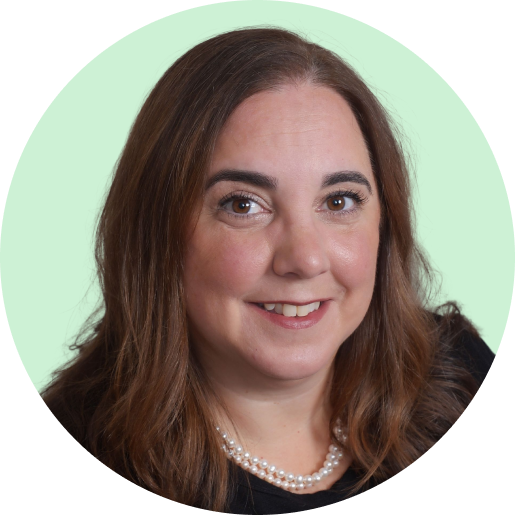
But when the conversation turns to what genuinely frightens her, she goes somewhere else entirely: fraud. Not on the firm’s part, but the weaponization of the tools the firm uses by people acting in bad faith.
 Gena Graziano
Voices can be cloned now, she explains. So theoretically, someone impersonating a client could call and ask to change the bank account on file for a vendor payment. Her firm has built controls around this exact threat—no bank-account changes without live verification, for example.
Como’s perspective on the detrimental side of AI is broader as well. Personally speaking, her worry extends beyond the tool’s behavior to its wider external impact—specifically, its environmental cost. She just can’t shake the image of the water in someone’s home running brown because a data center went up nearby. And she’d like to see real regulation to help temper the unbridled expansion of this rapidly changing technology—not because she completely opposes it, but because she’s afraid of what might happen if such a powerful, fast-moving thing is left to police itself.
Just like her worries about losing her ability to think and reason, these fears don’t have a clear solution at the firm level. Sure, you can create a policy for how your own team uses AI, but you can’t prevent a scammer from using it to do harm. You can’t prevent an AI company from selling more licenses and tokens—which then leads to the construction of more data centers. And that, perhaps, is why these developments are so unsettling to professionals who spend their days handling the risks they can control. And they point back to the one thing almost every professional in these conversations kept returning to.
What Stays Human
For all the ways the fears around AI diverge, the biggest answer to alleviating them is remarkably consistent.
A human being still has to oversee the work.
Even going back to the data from the AI report, this emerged as the one thing the entire profession agrees on more than anything else.
90% of respondents said human judgment matters more, not less, as AI spreads—the single most agreed-upon statement in the entire survey, across every role, firm size, and stage of adoption.
“Even if AI is doing the work, someone still needs to look at that work,” Zick emphasizes. “We as the accountants, we know our clients’ numbers; we know what to expect. We’re the expert.”
Graziano sums it up with a rule she’s repeated since the beginning.
Gena Graziano
Ammons echoes her peers with her firm’s standing decree that anything AI produces is a draft until a human has reviewed it—no matter how polished that draft may seem.
All of these standards are what turn concern into something other than paralyzing fear. A profession that verifies compulsively, that hesitates before it trusts, that trains its people to ask every question and poke every hole—that profession isn’t lagging behind the technology. It’s doing the one thing the technology cannot do: exercise human judgment.
It’s exactly why Harris promises every new hire that she’ll do everything she can to keep them from becoming obsolete. And to do it, she must empower them to build the muscle of judgment—to think without letting AI think for them first.
Huey put it in the terms of someone still early enough in her career to see both sides at once. She loves what AI can do—the hours it gives back, the research it accelerates. But she wants the knowledge in her own head, not just at her fingertips. She wants to be able to answer the important questions herself.
And that, more than any policy or guardrail, is the mindset that keeps a person irreplaceable. AI will always produce an answer, and a fast one at that. Knowing whether it’s right—and being the one your client trusts to say so—is still a wonderfully human job.



Enter your email address to receive new issues of the magazine straight to your inbox.