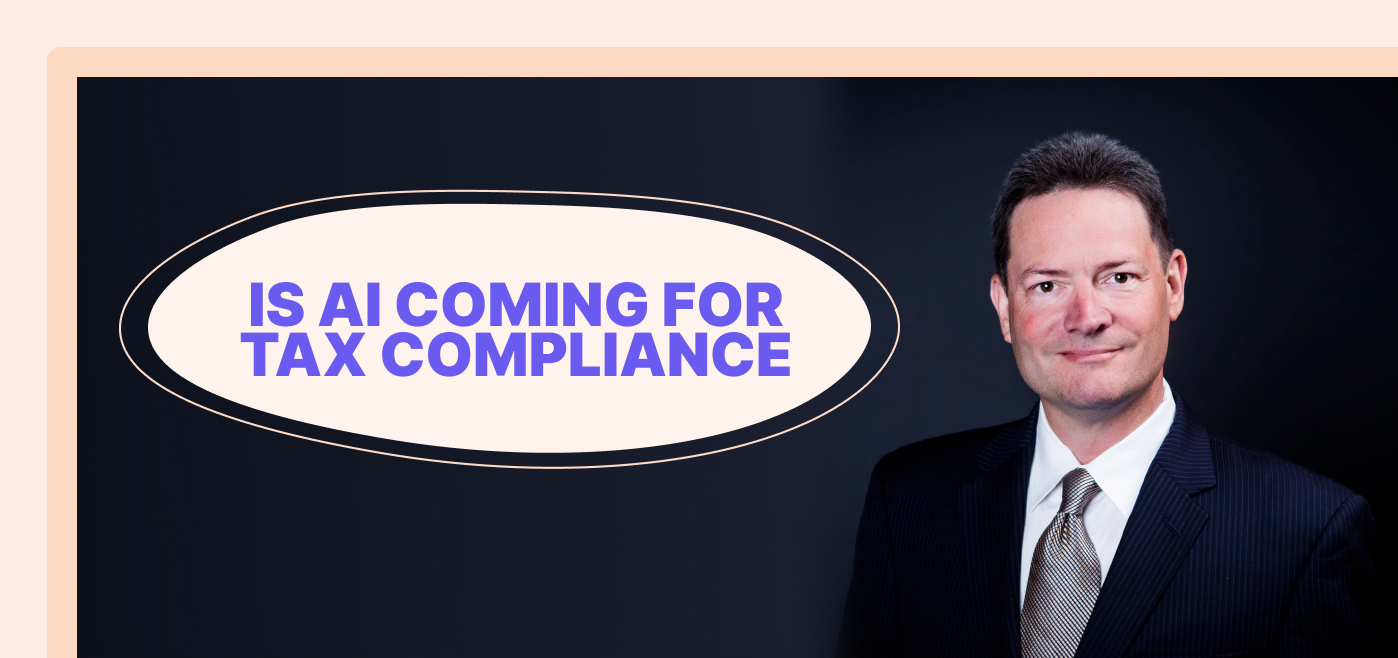
AI can already assist with tax research, document intake, and parts of simple return preparation. Scott Winters, CEO of Tax Master Network, argues that the opportunity for tax professionals is to move from routine compliance toward review, planning, and advisory work.
The short answer is “not yet,” but there is a curve tax professionals need to understand. It starts with computing power. Then it turns into better artificial intelligence. Then it becomes more productivity inside a tax practice. Then it becomes more profit. And then, for the professionals who keep climbing, it becomes something even better: the ability to play a bigger, more valuable role in your clients’ businesses.
That last one is the part everyone likes to skip, because they are too busy worrying about the robot piece.
Here is the good news. Right now, AI is helping summarize tax notices, draft client emails, categorize transactions, scan documents, research issues, and make first-year staff look slightly less terrified in March. If you are doing any of that in your firm, congratulations: you are not behind. You are on the on-ramp.
These everyday wins—like building workflows, automating client communications, renaming and flagging documents as they arrive, and turning recorded conversations into documented processes—are exactly where this journey is supposed to start.
They are low-risk and high-relief, and they buy back the scarcest commodity in a tax practice: time. (Maybe even enough time to get home before your family forgets what you look like.)
But things are changing fast. The speed of AI improvement is no longer theoretical. Epoch AI reports that training compute for frontier language models has grown roughly five-fold per year since 2020, doubling every 5.2 months. Stanford’s 2026 AI Index reports that AI capabilities are still accelerating, with major models reaching or exceeding human baselines on several advanced reasoning benchmarks. That does not mean your tax software is about to develop empathy (although frankly, that would be nice).
But it does mean the routine work of tax compliance is getting easier and cheaper every year, which might sound like a threat until you realize what it actually is: fuel for your next act.
The tools are already sitting on your desk, probably right next to the pile of 1099s your client promised were “definitely all there this time.” Case in point:
- H&R Block has AI Tax Assist available as part of their DIY software, providing clients instant answers 24/7.
- Intuit describes Intuit Assist as using traditional and generative AI inside of TurboTax to make tax preparation easier and faster.
- QuickBooks now promotes AI features for routine work such as context gathering, categorization, matching, and anomaly detection.
- Thomson Reuters has launched agentic AI tax workflow tools that process source documents and prior-year returns, extract and categorize data, and generate 1040 returns ready for professional review.
Translation: the machine is happy to handle the boring parts. So, let it!
Now, an honest word, because like you, I did not become a trusted advisor by sugarcoating things. As basic compliance gets faster and cheaper to produce, its economic value will compress. Sooner or later, a client will ask, “Why am I paying the same fee?” Do not fear that question. It is an invitation. Because the best answer a tax professional will ever give is this: “You are not paying me for the return anymore. You are paying me for what we do with it.”
You will be in good company. CPA.com and Blue J reported in June 2026 that 60% of firms now use AI-powered tax research, up from 33% in 2025. This is not a fringe experiment by three partners in fleece vests whispering about ChatGPT in the conference room. It is becoming normal operating procedure, adopted one small step at a time by firms that look a lot like yours.
The smartest of those firms are not using AI merely to do old work faster. They are using the time it frees up to do more valuable work.
There are several avenues where tax professionals are uniquely qualified, but the one with arguably the most pull is the migration to fractional CFO.
A fractional CFO relationship changes the conversation from “here’s what happened last year” to “here’s what we should do next quarter.” It moves the tax professional from historian to strategist. Instead of being paid primarily to report the financial past, you become part of the client’s financial future. That is a much better neighborhood, because it means fewer commodity comparisons, better recurring revenue, deeper client relationships, and more advisory leverage. (And, mercifully, fewer conversations that start with, “I know it’s April 13, but…”)
The trend is already measurable. CPA.com and AICPA PCPS reported that client advisory services practices grew at a median rate of 17%, projected continued growth, and identified CFO services as a regular offering for 69% of CAS respondents. In other words, advisory is not a motivational poster anymore. It is a practice model.
And here is why it fits you better than anyone else: you already have the trust, the financial data, and the annual relationship. You know where the bodies are buried, and in many small businesses, those bodies are often named “cash flow,” “pricing,” “payroll,” and “owner distributions.” AI can produce the dashboards, forecasts, variance reports, KPI summaries, and meeting prep. But no algorithm can sit across the table from a business owner, interpret the numbers in plain language, challenge bad assumptions, prioritize the decisions to be made, and say the sentence every owner secretly needs to hear: “No, buying another truck is not a strategy.”
That is the real payoff. Every hour AI takes off your plate is an hour you can spend with a client. And time with clients is exactly what turns a preparer into a trusted advisor. The machines are getting better at the returns, but they are not getting better at relationships. You are the relationship.
The best part? None of this has to happen by tomorrow. Automate one workflow this month. Turn one recorded client call into a documented process next month. Let one AI tool handle document intake during the off-season. All of those small steps add up. Firms that start with simple AI use cases like document renaming this year will be running AI-prepped advisory meetings in two.
The key is to simply start—not because you are behind, but because the earlier you plant, the more you harvest.
There is no doubt that AI will make compliance faster. Then, naturally, it will make compliance cheaper. Ultimately, it will make compliance expected. And at every step of that curve, it will give the tax professional who embraces it more time, more capacity, and more opportunity to matter. The compliance work will always need doing. But the future belongs to tax professionals who do more than prepare returns.
You want to be the person helping clients build businesses that create the returns.
Scott Winters is the CEO of Tax Master Network and the #1 bestselling author of “Good To Growing” and “Tax Professional to Fractional CFO.”