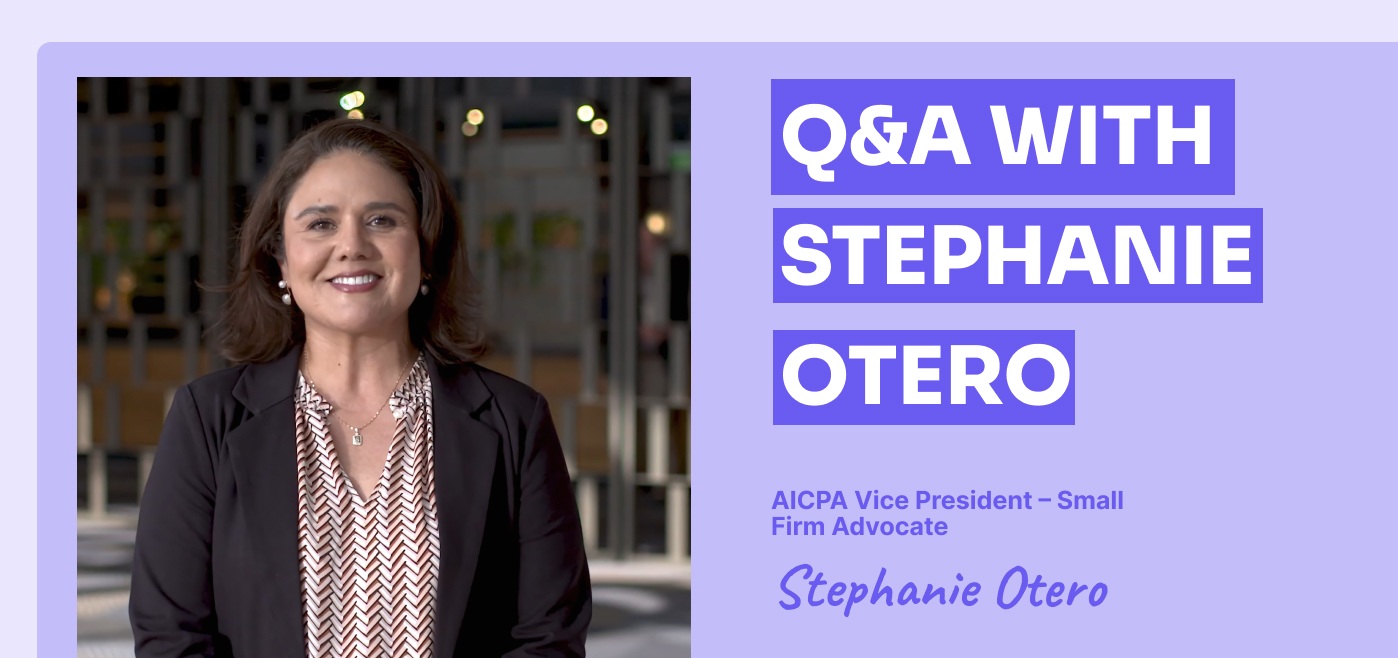
You ran your own CPA firm for 13 years before moving into advocacy work. What’s the one thing about running a small firm that you don’t think outsiders—or even the profession itself—fully appreciate?
When you own a small CPA firm, you’re not just doing client work. You’re the marketing guru, the compliance officer, the HR department, the tech support desk, the culture builder—and you’re doing all of that while trying to build a business and maintain high professional standards.
There’s also not a lot of room for margin for error or rest. There’s no “someone else” to handle whatever challenges may arise. It’s also deeply personal with their own personal reputation on the line. And yet, small firm owners still show up every day deeply committed to their clients, their teams, and the integrity of the work.
I think the profession sometimes underestimates just how much resilience, judgment, and emotional energy that requires—especially when small firms are navigating increasing complexity with limited resources. That’s something you really only understand once you’ve lived it.
Your title at AICPA is “Vice President – Small Firm Advocate.” What does that actually mean in practice? What does advocacy for small firms look like on a day-to-day basis, and who are you advocating to?
On a day‑to‑day basis, advocacy looks like listening first. I spend a lot of time talking directly with small firm owners and practitioners—through roundtables, networking groups, conferences, webcasts, surveys, and one‑on‑one conversations—to understand what’s actually happening in their firms right now. What’s getting harder? What’s working? Where are they feeling squeezed or overlooked?
Then my role is to take that real‑world input and turn it into action. That might mean the development of tools, guidance, and resources or It might mean elevating concerns internally when new standards, systems, or expectations are being discussed, and asking, “How does this land on a sole-practitioner or five‑person firm?”
My goal is to make sure small firms aren’t an afterthought, but a central part of the conversation—because the vast majority of CPAs practice in small firms, and their success is critical to the future of the profession.
At the end of the day, advocacy means making sure small firms feel seen, heard, and supported—not just in theory, but in the decisions that affect them every day.
There’s an unspoken stigma in this profession around being small, with firm owners often using words like “boutique” or “lifestyle” to avoid labeling themselves as “small.” Do you think that stigma is real, and where does it come from?
A lot of that stigma comes from how we talk about success in the profession. We celebrate scale, headcount, and revenue growth—but we don’t always celebrate depth of client relationships, community impact, flexibility, or sustainability. Yet those are things small firms often do exceptionally well.
I also think some of it comes from a misunderstanding of complexity. Small firms today are dealing with the same regulatory requirements, technological change, talent challenges, and client expectations as large firms—just without layers of staff or infrastructure. That takes a high level of skill, judgment, and adaptability, but it doesn’t always get recognized that way.
The irony is that “small” doesn’t describe capability—it describes size. And size alone tells you nothing about quality, professionalism, or impact. One of the things I’m passionate about in my role is helping shift that narrative, so being a small firm isn’t something to explain away—it’s something to stand behind with confidence.
The 2025 National Management of an Accounting Practice (MAP) Survey showed that small firms are growing—with a median 6.7% revenue increase year over year—and getting more competitive on compensation. Does that data match what you’re hearing on the ground? What do you think is driving the momentum?
A big driver of the momentum is specialization. Firms that have leaned into a niche—whether that’s industry‑based or service‑based—are commanding better fees and having more productive client relationships.
Regarding compensation, small firms know talent is their biggest constraint and their biggest opportunity. I’m hearing owners talk much more strategically about pay, flexibility, career paths, and culture—not just as retention tools, but as a competitive advantage. They may not be competing with large firms on brand size, but they are competing on meaningful work, autonomy, and quality of life, and that’s resonating with staff.
Many small firms are no longer chasing growth for growth’s sake. They’re focused on sustainable, profitable growth that supports the life they want as owners and creates a solid future for their teams.
The survey also found that small firms are “moving cautiously” on AI and automation. Is caution the right instinct right now, or are small firms at risk of falling behind?
I honestly haven’t met a small firm that isn’t using technology or AI in some capacity already. The difference is that small firms are being intentional with tools, asking very practical questions like, “Does this actually save time? Does it improve quality? Does it fit how we work?”
One of the advantages small firms have is agility. They don’t have layers of approval, massive legacy systems, or enterprise‑wide rollouts to manage. When a tool proves useful, small firms can adopt it quickly, adjust processes in real time, and move on. That flexibility is a huge competitive advantage.
The caution I’m seeing isn’t fear—it’s judgment. Many firms are balancing opportunity with responsibility, especially when it comes to data security, confidentiality, and professional standards. That’s not resistance to change—that’s professionalism.
Staffing and talent retention came up as the top challenge across nearly every firm size in the AICPA’s Top Issues Survey. What can small firms (those without big HR departments or enterprise recruiting budgets) realistically do about this?
One of the biggest advantages of working in a small firm is the diversity of experience. Early‑career professionals aren’t siloed—they get exposure to clients, industries, systems, and decision‑making much earlier than they would in a large firm. They learn how the whole firm works, not just one narrow slice of it.
That was absolutely true for me. Starting out in a small firm gave me confidence—not just technical confidence, but confidence in my judgment, my client relationships, and my ability to run a business. I don’t think I would have felt prepared to start my own firm if I hadn’t had that breadth of experience early in my career.
A lot of small firm owners tell us their firm is “running them” instead of the other way around, pointing to problems like operational chaos, things slipping through the cracks, and the constant feeling that they can never fully step away (e.g., to take a vacation). Do you think this is a systems problem, a mindset problem, or both?
They added clients, services, and responsibilities faster than they added structure. When that happens, the firm becomes very dependent on the owner being everywhere, all the time—and that makes it incredibly hard to step away.
But there’s also a mindset component. Small firm owners are often high performers who care deeply about their clients and their teams. That can turn into a mentality of “It’s just easier if I do it myself” or “I’ll fix it later when things slow down.” The problem is—things rarely slow down.
What I hear most often is not a lack of effort or competence—it’s exhaustion. Owners know changes are needed, but they’re so deep in day‑to‑day delivery that they don’t have the space to work on the firm instead of in it. And without intentional systems, every issue becomes urgent, every decision flows back to the owner, and the firm starts running them instead of the other way around.
The good news is this is fixable. When owners start putting even modest structure around workflows, decision‑making, and responsibility—and give themselves permission to let go of being the bottleneck—they often see an immediate shift. Not perfection, but relief.
The 2025 MAP Survey also found that small firms have historically underpriced their services, often billing by the hour or in ways that don’t reflect the full value they deliver. What is the first practical step toward shifting to value-based billing, especially for veteran firm owners who have been billing by the hour for years?
Hourly billing trains us to equate value with time. Value‑based billing starts when you step back and ask a different question: “What problem am I actually solving for this client, and what is that worth to them?”
A very realistic first move is to start by defining and packaging what you already do. Many small firms are delivering far more than compliance—they’re providing risk reduction, peace of mind, decision support, and forward‑looking guidance—but they’re billing as if they’re just selling hours. When you clearly articulate the outcomes your clients rely on you for, it becomes much easier to price around value instead of time.
I often suggest starting small. Don’t rip out hourly billing overnight. Pick one service, one client segment, or one new engagement and try a fixed or value‑based approach there. That creates a low‑risk way to experiment, learn, and build confidence.
What’s also important is recognizing that underpricing isn’t just a pricing issue, it’s a sustainability issue. The firms I see making progress are being intentional, thoughtful, and honest—about their value, their capacity, and what it takes to deliver high‑quality work. And once that mindset shifts, the mechanics of billing tend to follow much more naturally.
What does “growth” actually mean for a small firm that doesn’t want to become a large firm? Is staying intentionally small a legitimate strategy, or does standing still eventually become a risk?
Staying intentionally small is absolutely a legitimate strategy—but standing still isn’t. There’s a big difference between choosing not to scale headcount and avoiding change. Even firms that want to stay the same size still need to evolve, because the environment around them is constantly changing—technology, regulation, client expectations, talent dynamics.
The risk isn’t being small. The risk is being static while everything else moves forward. So growth, in this context, is really about progress. It’s about building a firm that’s sustainable, profitable, and aligned with the owner’s goals. You can absolutely do that without becoming bigger—but you can’t do it without being intentional.
If you could tell every small accounting and bookkeeping firm owner in North America one thing they need to hear right now, what would it be?
Running a small CPA firm requires an extraordinary breadth of experience and skill. Owners and practitioners are balancing technical excellence, client relationships, operations, people leadership, and constant change—often all at once. And they are doing it. I see them, and I see the effort, care, and commitment they bring to their work every day.
Small CPA firms are essential to the profession. They serve as trusted advisors in their communities, support businesses at critical moments, and uphold the public trust. The future of the profession depends on their success—and they deserve to build firms that don’t just survive, but truly work for them.



Enter your email address to receive new issues of the magazine straight to your inbox.